
USDA Addresses Diet, Obesity, Nutrition- Learning Link in Children
Physiological, environmental, and psychological factors that influence our food choices were the topic of the day.
On Obesity
Following an earlier report showing a dramatic increase in obesity among Americans, Glickman addressed the health and diet challenge facing Americans in an era characterized by the proliferation of convenient, if not highly nutritional foods represent the highest growth sectors of the food industry. (See related article)
"The ultimate challenge falls to the American people to take responsibility for their own health, to improve their diets and increase physical activity," citing a recent study by the Centers for Disease Control and Prevention that showed a tremendous increase in obesity among Americans.
On the American Diet…
"Government can shine the spotlight and direct resources to solving the problems of obesity and poor nutrition. But only individuals can commit themselves to good nutrition and good health."
USDA will take the following steps to foster than change:
• USDA will soon release Dietary Guidelines 2000, providing common sense advice about good nutrition and healthy lifestyles for the new millennium.
• A National Nutrition Summit, cosponsored by USDA and the U.S. Department of Health and Human Services, will call attention to the need for better nutrition.
• In May, USDA will start a new Behavioral Nutrition Research Initiative, bringing together USDA researchers, the academic community, and the private sector to explore Americans' food choices.
• In the spring, USDA will start a nutrition intervention pilot program in the Mississippi Delta.
• A new Interactive Healthy Eating Index, an Internet-based tool, will allow users to grade their own diets and track changes in their diets over time.
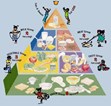
Glickman said that USDA will also continue to work with partners in the public and private sectors to deliver practical advice on nutrition and health directly to consumers. He cited plans by Quaker Oats to begin placing USDA's new Food Guide Pyramid for Young Children (ages 2-6) on hot cereal boxes in January 2000.
USDA's new Food Guide Pyramid for Young Children (shown), along with links to pyramids for scores of special diets, is available at http://www.usda.gov/cnpp.

Do Nutritious School Lunches Foster Learning?
Glickman also announced that USDA is following through on a Presidential initiative to determine whether free breakfasts for children at school improves academic performance, behavior, and attendance.
The goal is to document the critical link between nutrition and learning.
"Teachers have told us for many years that all students, regardless of their family income, do better and behave better in school if they eat a nutritious breakfast," President Clinton said. "We think this can be a simple way to boost children's performance in school."
The pilot projects will operate for three years in selected school districts across the country. Certain schools in those districts will offer free breakfasts to all children. An evaluation will assess the effect of the availability of free breakfast on such factors as academic achievement, attendance and tardiness, classroom behavior and discipline, and dietary intake over the course of a day. The study also will evaluate comparison schools not offering the free breakfast program.
President Clinton requested $13 million, and Congress provided $7 million in USDA's Fiscal Year 2000 budget for breakfast pilot projects.
USDA will invite school districts to compete for the pilot projects by submitting applications later this year, and will select the sites in the spring of 2000. USDA operates the National School Lunch and School Breakfast Programs for children, as well as a dozen other nutrition assistance programs.
Edited by Bob Sperber